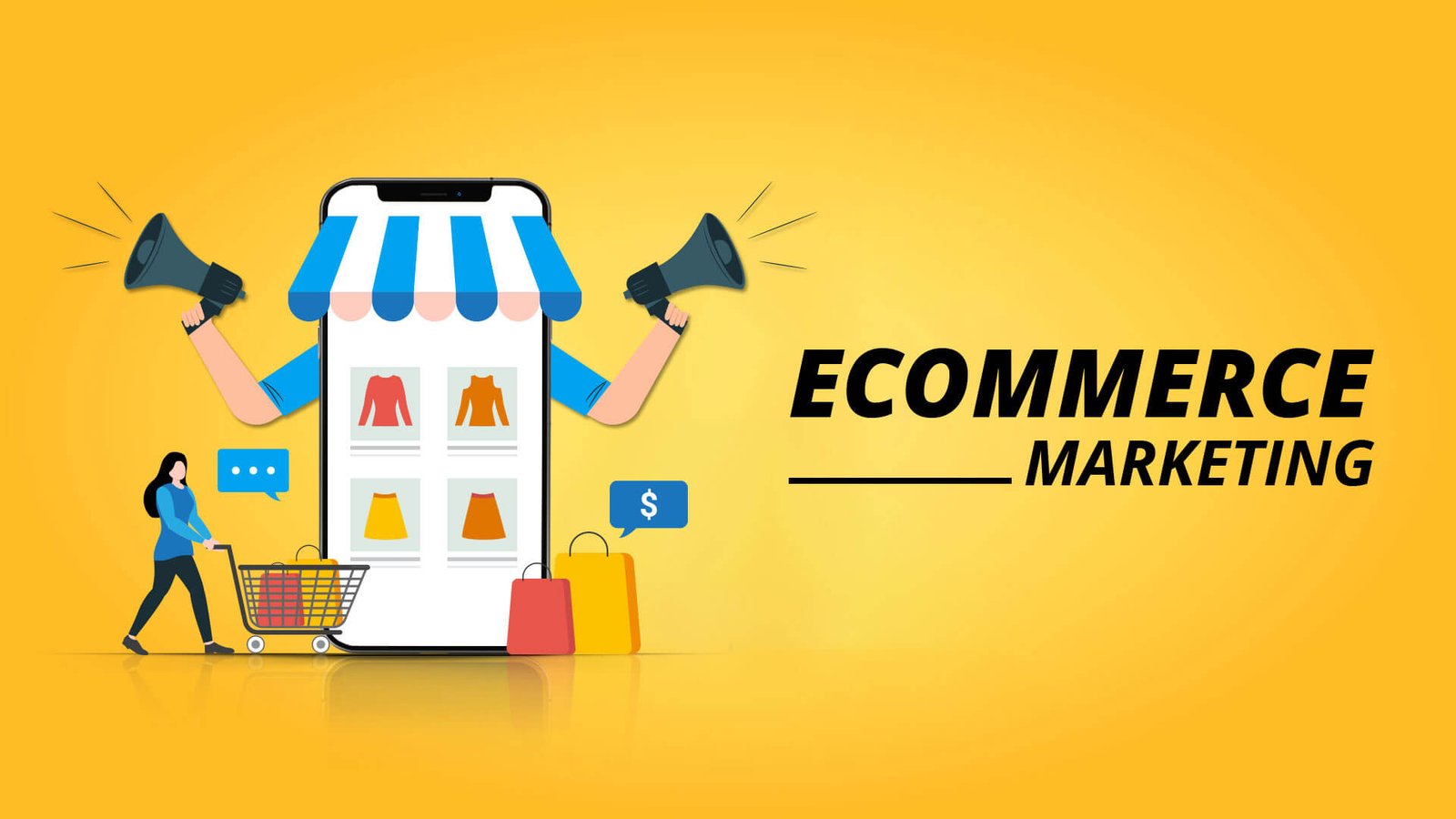
E-COMMERCE MARKETING
WHAT IS E-COMMERCE MARKETING?
E-commerce marketing for digital marketing is nothing but buying, dealing or promoting products, goods, or services online. A product/ goods is a physical thing like vehicles, electronic widgets, clothes, and food. Service is a price we pay for someone’s work or experience. Example: Graphic developer, mastermind, and hairstylist. E-commerce business can be done through media like computers, laptops, mobile phones, tablets, or other smart devices.
 WHY IS E-COMMERCE MARKETING IMPORTANT?
1) REACH PEOPLE
We can have a physical store in India but people from each over the country can purchase and buy our product through websites or online platforms, this gives easy access to any number of guests.
2) COST-EFFECTIVE
E-commerce units may bear a storehouse or manufacturing point, but they generally do not need a physical storefront. The cost to operate digitally is frequently less than demanding to pay rent, insurance, electricity bills, water bills, and property levies. The cost is comparatively less because to print a billboard or pamphlets, a minimal quantum has to be invested. But to produce an online bill announcement. No cost is needed; thus, without any cost, we can conveniently pass information to guests.
3) EASY TO TRACK RESULTS
We can ultimately get analytics and deals data for our business through website visits and the purchase tab the gate has information about the individuals who visit its point and have made purchases. It uses this information in several ways to maintain the interest of the consumers, like participating in a past board and sending emails for cross-selling purposes. It’s possible when a client visits a certain runner in a particular period.
4) BOOST DEALS
E-commerce marketing offers scalability and flexibility, allowing businesses to grow and adapt according to changing request trends and client demands. With digital marketing, you can easily make adaptations to your business, test different strategies, and identify your approach based on real-time results.
TYPES OF E-COMMERCE BUSINESS
There are four types of e-commerce businesses
- B2B
- B2C
- C2B
- C2C
Business to Business( B2B)
Business-to-business is where a formerly large or small business unit sells in large or noncommercial volumes to another business illustration IndiaMart( deals with the deals process of different diligence).
Business to Consumer( B2C)
Business to Consumer is where a business sells its products and services to direct consumers through e-commerce platforms like Amazon, Flipkart, Etsy, Myntra, and soon.
Consumer to Business( C2B)
Consumer to Business is where a consumer helps out the existing deals of a business by promoting or developing the business illustration Influencer ( by promoting brands), Graphic developer( by creating website).
Consumer to Consumer( C2C)
Consumer-to-Consumer is where a consumer sells used or alternative hand products to another consumer through e-commerce illustration OLX, Quikr, etc.
TYPES OF E-COMMERCE MARKETING
The types of e-commerce marketing are as follows
- Social Media Marketing
- E-mail Marketing
- SEO( huntmachine optimisation)
- Content Marketing
- Influencer Marketing
SOCIAL MEDIA MARKETING: Social media marketing is using social media to grow your brand’s followership, ameliorate its character, and increase protocol.
Common tactics include
- Participating applicable, helpful content.
- Responding to client questions.
- Advertisement updates to appear more relatable.
E-MAIL MARKETING: E-mail marketing is transferring emails to the regular consumer of your products, following up with them with new launches, time end trade, jubilee offers, which will react to the deals of the business. SEO( hunt machine optimisation) SEO increases visibility in hunt machine results runners ( SERPs). The primary thing is to rank high for keywords your ideal guests use.
For illustration, the direct-to-consumer B2C brand Trek ranks loftiest for mongrel bikes. People searching for mongrel bikes will thus be more likely to click on Trek’s runner.
CONTENT MARKETING: Content marketing involves creating and participating in useful, applicable material, such as blog posts, videos, and infographics. This content attracts and retains cult.
Other popular content formats include
- Emails
- Newsletters
- Ebooks
- Podcasts
- Social media posts
- FAQs
INFLUENCER MARKETING: Influencer Marketing matches brands with well-known social media personalities. Businesses pay or compensate influencers promote products, which gives the brand exposure.
BENEFITS OF E-COMMERCE TO BUSINESS ORGANISATIONS
- It gives a competitive advantage over challengers.
- It helps business organisations by gradually reducing the cost of operations.
- It also expands the business to public and transnational requests.
- It also facilitates Pull Supply Chain Management. Pull strategy means following a just-in-time force operation fashion under which the organisation enters the products into the force chain only when the client demand justifies it.
- Because of e-commerce, small and big enterprises co-occur in the request.
- It also enables proper operation and supports business processes.
CONCLUSION
The geography of e-commerce has experienced a remarkable elaboration, shaping the way businesses operate and consumers shop. In this comprehensive overview, we delve into the multifaceted impact of e-commerce on diligence, husbandry, and the daily lives of people.
The elaboration of Online Retail
The elaboration of online retail represents a transformative trip that has reshaped traditional commerce, presenting businesses and consumers with new opportunities and challenges. This section delves into the crucial milestones and shifts that have characterized the remarkable progression of e-commerce.